Crawl Space Mold Remediation in Metairie, LA
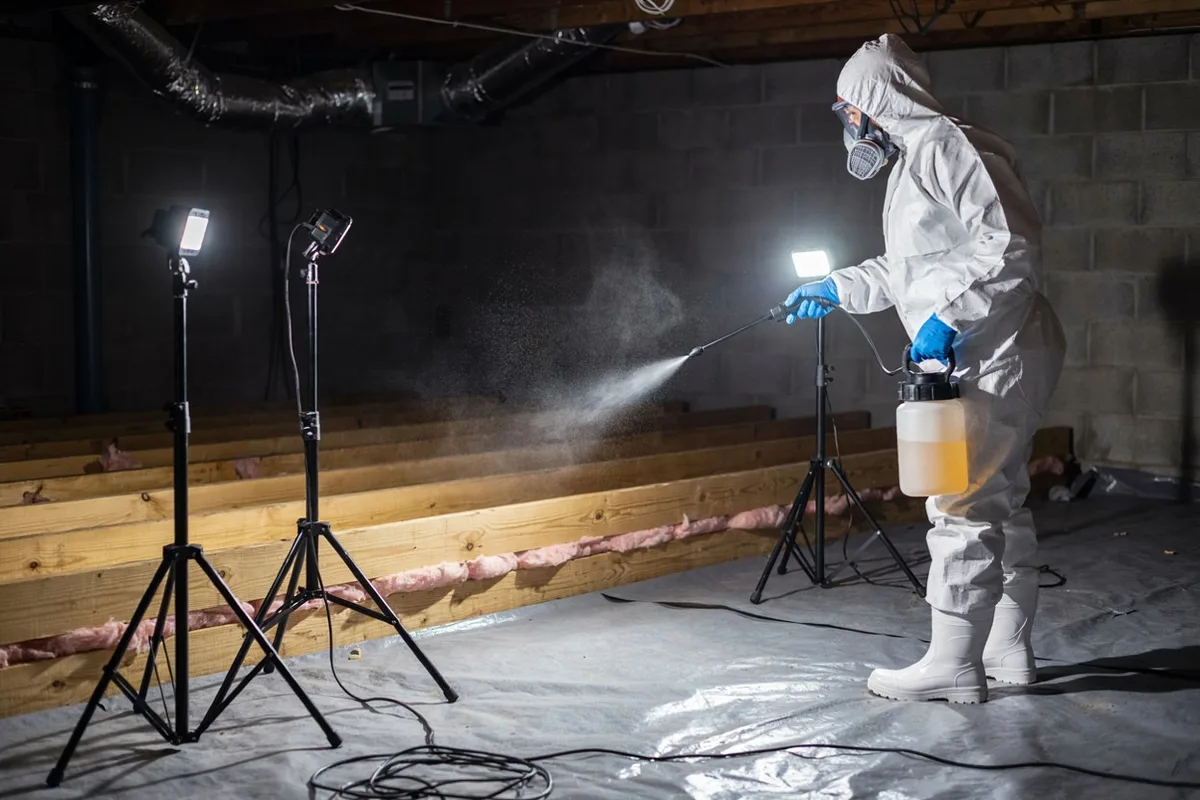
Most of Jefferson Parish is slab, but the older parts aren’t. Old Metairie along the ridge, the river-side streets of Harahan and River Ridge, the town of Jefferson, and the historic blocks of Gretna are full of raised houses from the 1920s through the 1950s, sitting on piers eighteen inches to three feet above ground that is a few feet above — or below — sea level. That space under the floor holds the most humid air in the house, and the smell that comes up through the boards is usually the first sign. Call and tell us what you smell.
What the work looks like
We put the crawl space under containment from the house side, remove insulation that has gotten wet or grown mold, and clean the joists, beams, and subfloor in place. Standing water or a plumbing leak under the floor has to be dealt with before that cleaning means anything — we find it and tell you what has to change. When the wood is dry enough, LSU AgCenter’s guidance is below 20 percent moisture, the space can be closed back up with a vapor barrier on the ground so it stays drier than it was.
What a persistent musty room tells you about the space under it
- A closet or hallway that always smells damp with nothing on the walls points to moisture in that part of the house — often the floor system below it.
- Fiberglass batts under a floor soak up humidity and hold it against the subfloor, which makes them a different problem than the bare wood.
- Ground under a raised house in Jefferson Parish sits near the water table and rarely gets a dry week.
- Wet wood that stays closed in a dark space keeps supporting growth until it is cleaned and dried.
Tell Us What You Smell, 24/7
Metairie notes
The raised cottages in Old Metairie mostly stayed above the 2005 water, but the crawl spaces under the lower ones on the lake side of Metairie Road did not, and some were never opened up afterward. In Harahan and River Ridge the ground is higher on the river’s natural levee and the issue is more often a long plumbing leak than a flood. On the West Bank, the old houses near the ferry landing in Gretna sit on brick piers over ground that stays wet most of the year. Tell us the street and the age of the house and we’ll know roughly what we are walking into.