Bathroom Mold Removal in Metairie, LA
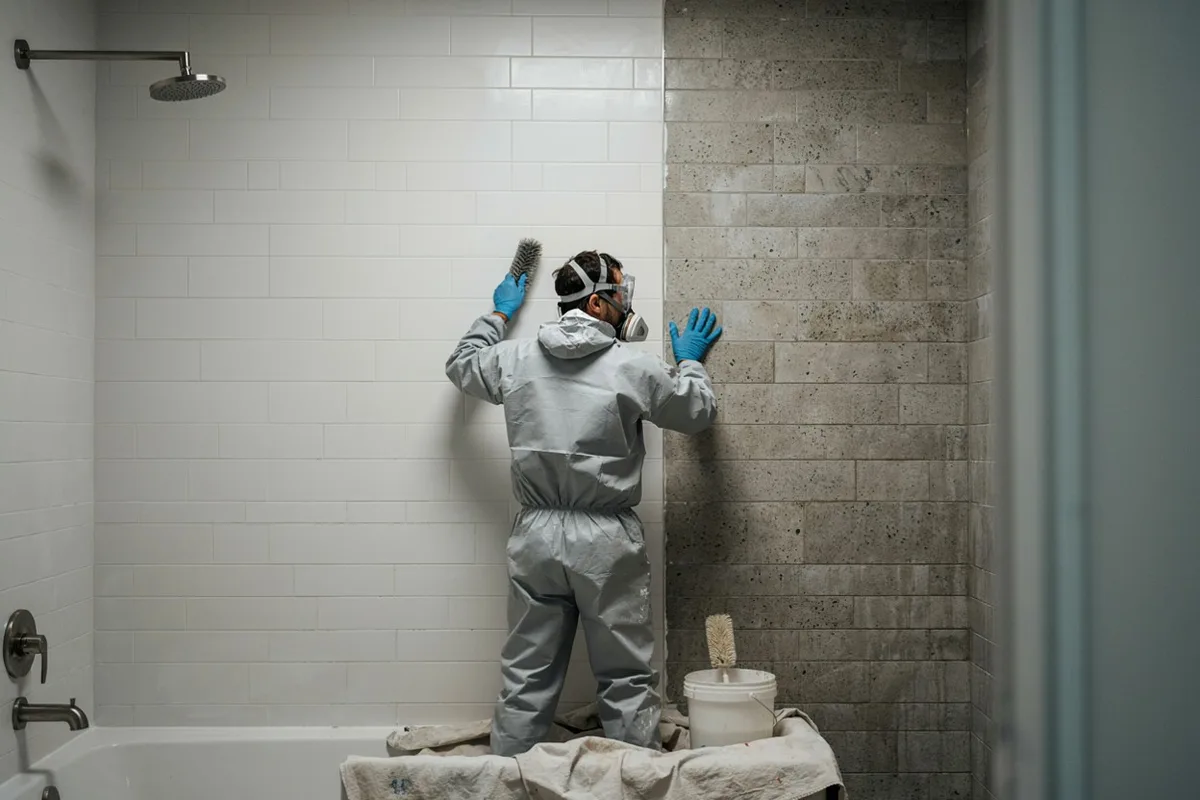
A Metairie bathroom starts every day at 88 percent humidity and then gets a hot shower on top of it. Most of the 1950s-to-70s ranches around Veterans and West Esplanade have a small hall bath with a fan that is either missing or venting into the attic, so the moisture has nowhere to go but the ceiling and the wall. Call and say where you see it.
What you can clean and what you can’t
On tile, grout, caulk, and painted hard surfaces, growth under about ten square feet can be cleaned with detergent and water — that is EPA’s guideline for homeowners. Pull the caulk if it is black on the underside and re-run it. Run the fan during and after showers, or add one if there isn’t one.
When it stops being a cleaning job
- Growth on ceiling drywall, in the wall behind the toilet or tub, under the vanity, or in the subfloor around the toilet flange is inside a porous material, not on it.
- Scrubbing changes how it looks for a few weeks; the growth in the paper backing stays, and EPA says bleach isn’t a routine answer.
- The affected material comes out, the cavity gets cleaned and dried, and the shower pan, wax ring, supply line, or overflow that fed it has to be handled before it closes.
- A leak that has been seeping for a year has usually spread further than the stain shows.
Tell Us Where You See It, 24/7
Metairie notes
Slab houses in Bonnabel, Bissonet, and Terrytown often still carry the original galvanized or copper supply lines, and a slow leak inside the wall shows up first as a baseboard that has gone soft or a bubble in the paint low on the wall. The raised houses in Old Metairie and Harahan leak downward instead, and the smell arrives through the floor before anything shows in the room. Either way, tell us what you see and we’ll tell you where we would open it.