Black Mold Removal in Metairie, LA
A dark patch is what most people are looking at when they search for this page: greenish-black on a ceiling under the attic air handler, along the bottom of a bathroom wall, behind a dresser on an exterior wall, around a vent grille. It is unsettling to find. Here is the useful part: CDC says it doesn’t matter what kind of mold it is, because all mold gets treated the same way and removed. Visible mold needs removal, not a nickname. Call and tell us where it is.
What “black mold” usually means
The species people mean, Stachybotrys, is greenish-black, slimy when wet, and grows on drywall paper, ceiling tile, and other paper-based materials that have stayed wet for a long time. That last part is the point. A dark patch is less a warning about the species than a sign that something has been wet for a while — a slow supply leak, a roof that has been dripping onto the ceiling for a season, a condensate line that backs up every summer. Plenty of dark mold is Cladosporium or Alternaria, and plenty of Stachybotrys isn’t black. CDC also says the color doesn’t tell you what to do.
The sooner you find it, the smaller the fight
- The stain may not show the whole problem — a dark patch on the room side of drywall is often the surface of growth on the back of the sheet.
- Materials wet for more than 48 hours will generally support visible and extensive growth, according to CDC, so a dark patch means the clock ran a while ago.
- Killing it isn’t the same as removing it; dead growth is still an allergen.
- Handling a dark patch differently from any other mold doesn’t change the outcome — containment, removal, cleaning, drying, report.
See Growth On Drywall Or Trim? Call, 24/7
What the removal looks like
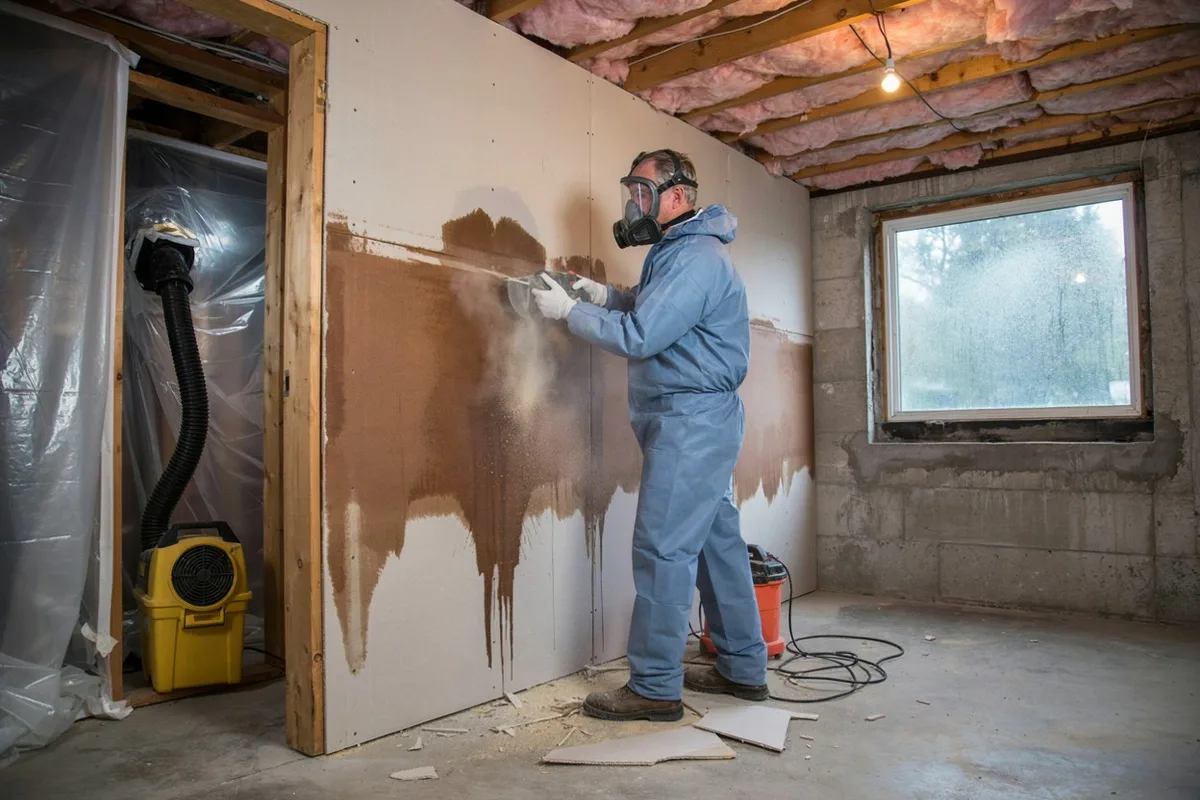
The same as any other mold job, done carefully. The area is sealed and put under negative pressure. The drywall, ceiling, or trim with the growth in it comes out in pieces and is bagged inside the containment. Whatever it was attached to gets cleaned and dried. We find the moisture that kept it wet that long and tell you what has to change. You get the written report Louisiana requires. If someone in the house has asthma or allergies, tell us on the call — CDC says people with asthma or mold allergies may react more strongly, and it changes how we sequence the work.
Metairie notes
Dark ceiling patches under an attic air handler are the most common version here — a drain pan that overflowed, or a unit that sweated through August onto the drywall below. The second most common is a bathroom wall in a slab ranch where a shower valve has been weeping inside the wall for a year. Both are ordinary removals once the water is dealt with.